
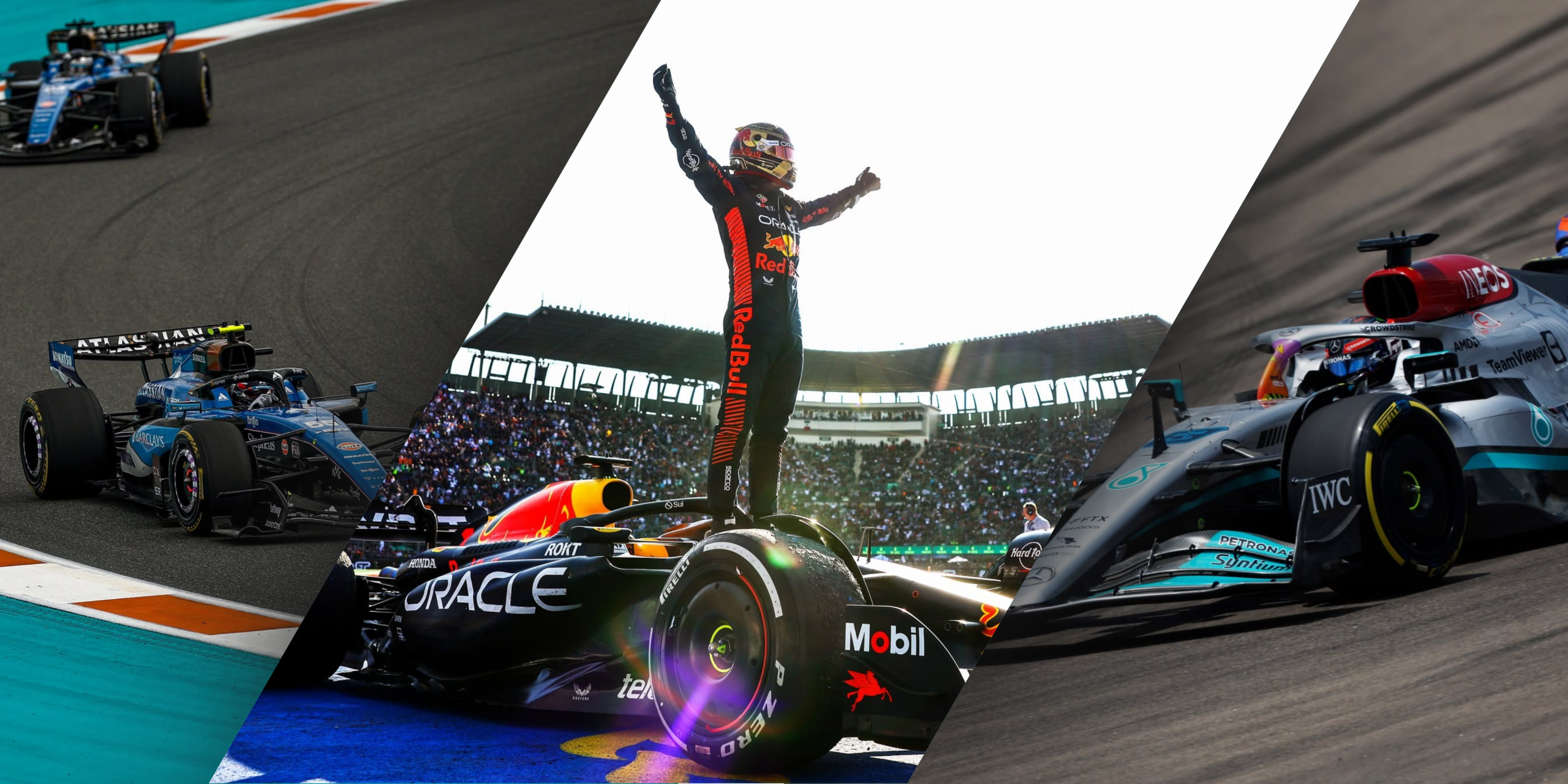
Formula 1 is the pinnacle of motorsport, bringing together the world’s fastest race cars, elite drivers, and cutting-edge technology. Every race is a blend of speed, strategy, and teamwork, making it one of the most exciting sporting events in the world.
If you’re new to Formula 1, here’s a quick guide to help you understand the sport.
The Teams and Drivers
The 2026 Formula 1 grid features 11 teams, each fielding two drivers. Scuderia Ferrari is the sport’s oldest team, having competed since the inaugural championship in 1950, while Cadillac joins as the newest team for the 2026 season.
Reigning World Drivers’ Champion Lando Norris races for McLaren alongside teammate Oscar Piastri. The other drivers and teams are:
- Charles Leclerc and Lewis Hamilton – Scuderia Ferrari
- Max Verstappen and Isack Hadjar – Oracle Red Bull Racing
- George Russell and Kimi Antonelli – Mercedes-AMG Petronas
- Sergio Perez and Valtteri Bottas – Cadillac
- Fernando Alonso and Lance Stroll – Aston Martin Aramco
- Pierre Gasly and Franco Colapinto – BWT Alpine
- Liam Lawson and Arvid Lindblad – Visa Cash App Racing Bulls (VCARB)
- Esteban Ocon and Oliver Bearman – TGR Haas
- Alex Albon and Carlos Sainz – Atlassian Williams
- Gabriel Bortoleto and Nico Hülkenberg – Audi Revolut
The Cars
Formula 1 cars are among the most advanced race cars in the world. Built from lightweight carbon fiber, they use sophisticated aerodynamics and hybrid power units that combine a 1.6-liter turbocharged V6 engine with an electric motor to produce around 1,000 horsepower.
The Grand Prix Calendar
A Grand Prix is an individual Formula 1 race. The 2026 season features 22 Grands Prix across the globe:
- Australian Grand Prix
- Chinese Grand Prix
- Japanese Grand Prix
- Miami Grand Prix
- Canadian Grand Prix
- Monaco Grand Prix
- Barcelona-Catalunya Grand Prix
- Austrian Grand Prix
- British Grand Prix
- Belgian Grand Prix
- Hungarian Grand Prix
- Dutch Grand Prix
- Italian Grand Prix
- Spanish Grand Prix
- Azerbaijan Grand Prix
- Singapore Grand Prix
- United States Grand Prix
- Mexico City Grand Prix
- São Paulo Grand Prix
- Las Vegas Grand Prix
- Qatar Grand Prix
- Abu Dhabi Grand Prix
Among these, the British, Monaco, Belgian, and Italian Grands Prix have been part of the Formula 1 calendar since its early years.
The Race Weekend
Formula 1 weekends run from Friday to Sunday.
- Friday: Two practice sessions where teams fine-tune their cars, test tire performance, and prepare race strategies.
- Saturday: Qualifying takes place in three knockout sessions (Q1, Q2, and Q3). The fastest driver earns pole position, the first spot on the starting grid.
- Sunday: Drivers compete over at least 305 kilometers—except in Monaco—for the Grand Prix victory. If there’s an incident, race officials may deploy the Safety Car, during which overtaking is prohibited.
Championship Points
The top 10 finishers score championship points, with the winner receiving 25 points. These points determine both the World Drivers’ Championship and the World Constructors’ Championship over the course of the season.
Why Formula 1 is Worth Watching
Formula 1 is more than just driving fast. Every race is shaped by strategy, teamwork, pit stops, weather, and split-second decisions that can change the outcome in an instant.
Whether it’s a dramatic overtake, a perfectly timed pit stop, or a thrilling finish, Formula 1 delivers excitement every race weekend. Understanding the basics makes every lap even more enjoyable.