
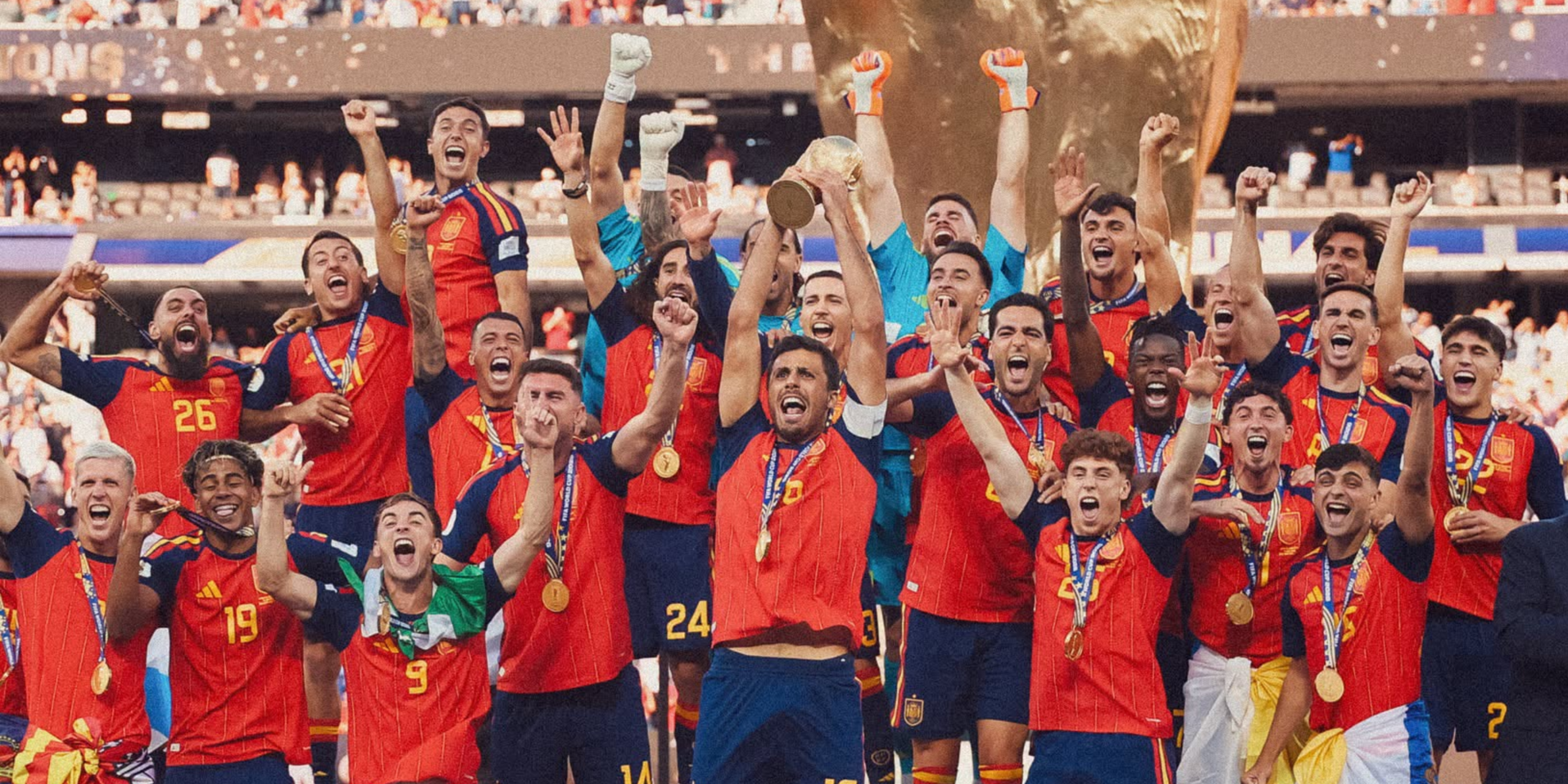
The 2026 FIFA World Cup concluded on July 19 after more than a month of thrilling football, dramatic moments, and memorable performances. In the end, Spain emerged as world champions, capping off a campaign defined by tactical discipline, adaptability, and defensive excellence.
Relive La Roja’s journey to conquering the world’s biggest stage.
Spain’s journey: Discipline meets adaptability
Spain’s success stemmed from its ability to adapt. During the group stage, La Roja controlled matches through patient possession and organized defending before shifting to a more aggressive attacking approach in the knockout rounds.
As the competition progressed, Spain tailored its tactics to each opponent, overcoming Belgium with tactical flexibility and shutting down France with defensive solidity. The run culminated in a blockbuster final against defending champions Argentina, who were seeking to become only the third nation to win consecutive World Cup titles.
Argentina’s journey: Messi leads the charge
Argentina’s campaign revolved around Lionel Messi, who, at 39, was chasing what could be his final World Cup triumph. La Albiceleste built its attack around the veteran forward, allowing him to conserve energy before creating decisive moments in the final third.
The strategy paid off as Argentina reached the final unbeaten. Messi finished the whole FIFA World Cup 2026 with eight goals—including a hat-trick against Algeria—to rank second in the tournament’s scoring charts behind Kylian Mbappé.
The final: Spain’s masterclass
The final lived up to expectations, with Spain producing another disciplined performance to claim the FIFA World Cup title. La Roja kept Lionel Messi largely quiet while controlling the match completely, holding Argentina without a single shot during the first 90 minutes of regulation.
Despite Emiliano Martínez’s heroic display under heavy pressure and Argentina’s determined defensive effort, La Albiceleste struggled to gain momentum. Their task became even more difficult after Enzo Fernández was sent off in extra time, leaving the defending champions with 10 men.
The breakthrough came in the 106th minute when substitute Ferran Torres volleyed home Nico Williams’ headed assist to seal a 1-0 victory and Spain’s second FIFA World Cup title. Spain also finished the tournament with an outstanding defensive record, conceding just one goal in seven matches.
A champion worthy of the crown
From the group stage to the final, Spain consistently found ways to outplay its opponents. Whether through patient possession, tactical flexibility, or defensive solidity, La Roja delivered when it mattered most. The 1-0 victory over Argentina sealed Spain’s second FIFA World Cup title and capped a campaign that will be remembered as one of the tournament’s finest.